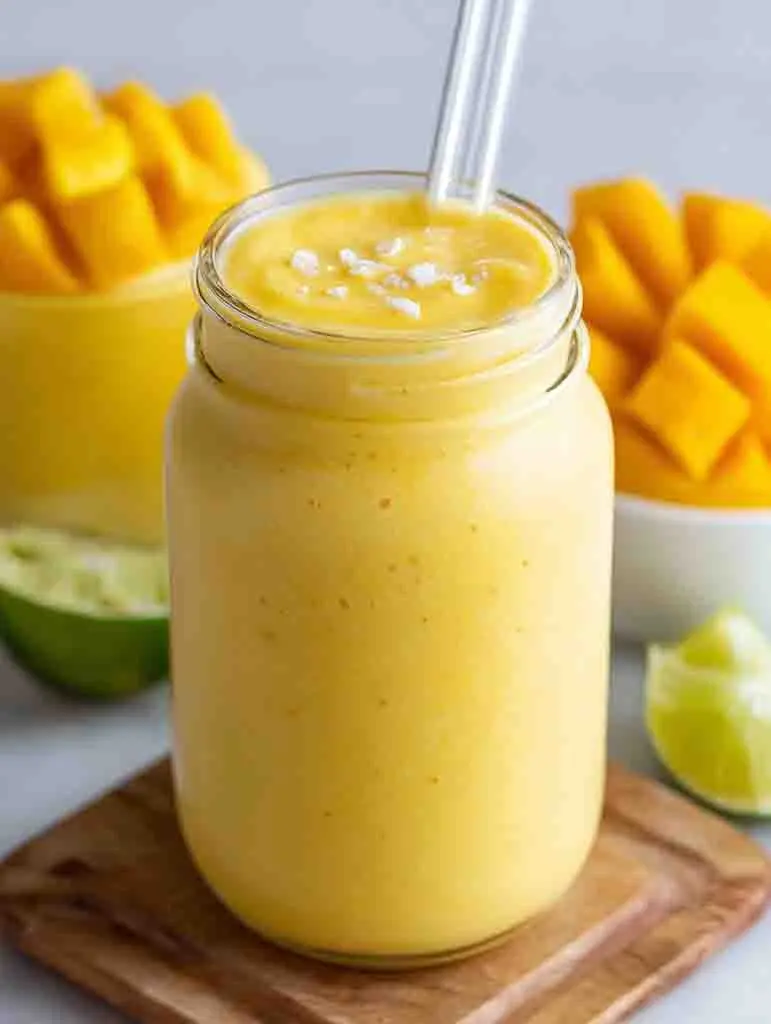
Mango Smoothie Magic is the perfect creamy and refreshing drink you’ll want to enjoy every day. Made with ripe mango, banana, and yogurt, this easy smoothie recipe is naturally sweet, healthy, and ready in just minutes. Whether you’re looking for a quick breakfast, a cooling summer drink, or a nutritious snack, this mango smoothie delivers both flavor and energy in every sip.
What Makes the Perfect Mango Smoothie?
The perfect mango smoothie is a symphony of flavor and texture, with several key elements working in harmony. At its core, it strikes an ideal balance between sweetness and creaminess – not too sugary, not too thick, but just right.
Mango selection is crucial. A perfectly ripe mango brings natural sweetness and that distinctive tropical flavor that’s impossible to replicate. When pressed gently, it should yield slightly under your fingers, similar to a ripe avocado. The fruit’s aroma at the stem end should be fragrant and sweet, according to mango ripeness guidelines from the National Mango Board.
The supporting cast of ingredients matters significantly too. A complementary base – whether dairy or plant-based – should enhance the mango’s natural flavors without overpowering them. Yogurt adds tanginess and protein, while coconut milk contributes a complementary tropical note.
Texture is another critical consideration. Do you prefer a thick, spoonable consistency or something more sippable through a straw? This preference will guide your ingredient ratios and potentially your thickening agents (like banana or ice).
Finally, your equipment can make or break your smoothie experience. While high-powered blenders can pulverize even frozen fruit into silky perfection, regular blenders can still produce excellent results with proper preparation (like cutting mangoes into smaller pieces). The ideal mango smoothie is smooth and consistent throughout, with no fibrous bits disrupting each velvety sip.
Nutritional Benefits of Mango Smoothies
Mango smoothies aren’t just delicious treats – they’re also nutritional powerhouses, as the nutritional benefits of mangoes confirmed by Harvard nutritionists show. These golden fruits pack an impressive array of vitamins and minerals that contribute to overall health and wellbeing.
Mangoes shine in their vitamin content. A single cup of mango provides about 67% of your daily vitamin C needs, supporting immune function and collagen production. They’re also rich in vitamin A (25% of daily needs), essential for vision, immune health, and cellular communication. You’ll also find B vitamins like folate, which supports cell division and is especially important during pregnancy.
The fiber content in mangoes deserves special attention. With about 3 grams per cup, mangoes contribute to digestive health, help maintain steady blood sugar levels, and promote feelings of fullness. This makes mango smoothies more satisfying than many other fruit-based beverages.
Mangoes contain over a dozen different polyphenols and carotenoids – powerful antioxidants that help combat oxidative stress and inflammation in the body. These compounds may contribute to mangoes’ potential anti-cancer properties being studied by researchers.
When you combine mangoes with protein sources like Greek yogurt or protein powder, your smoothie becomes more nutritionally complete. This transforms it from a simple snack into a mini-meal that can keep you satisfied for hours.
While mangoes do contain natural sugars (about 25g per cup), they have a moderate glycemic index, meaning they cause a slower rise in blood sugar than many other sweet foods. The fiber content further helps moderate this effect. That said, those monitoring sugar intake should be mindful of portion sizes and additional sweeteners.
Classic Mango Smoothie Recipe
This foundational recipe creates the perfect balance of flavors and textures that lets mango’s natural brilliance shine through. Master this version, and you’ll have a solid base for all your future mango smoothie adventures.
Ingredients:
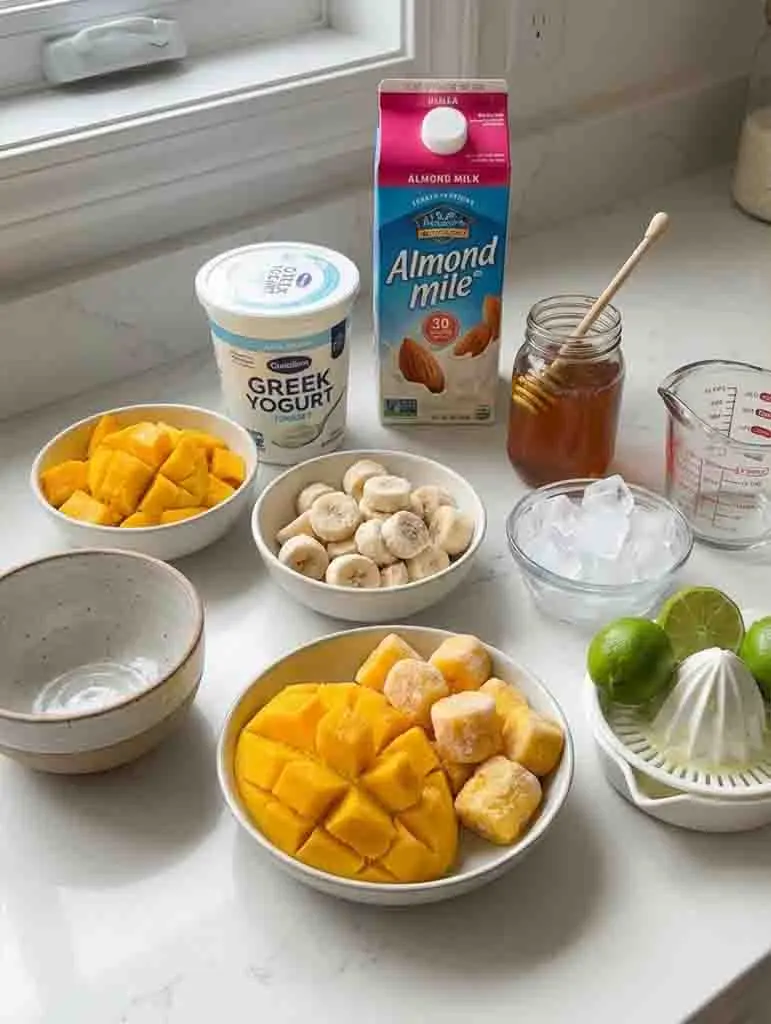
- 1 cup fresh or frozen mango chunks (about 1 medium mango)
- ½ frozen banana
- ½ cup plain Greek yogurt
- ½ cup milk (dairy or plant-based)
- 1 tablespoon honey or maple syrup (optional, depending on mango sweetness)
- ½ cup ice cubes (omit if using frozen fruit)
- Squeeze of lime juice (optional)
Instructions:
- Add all ingredients to your blender, starting with the liquids on the bottom for easier blending.
- Blend on low speed for 30 seconds to break down the frozen ingredients.
- Increase to high speed and blend for 1-2 minutes until completely smooth.
- Taste and adjust sweetness if needed.
- Pour into glasses and enjoy immediately.
Pro tip: For the silkiest texture, let frozen ingredients thaw for about 5 minutes before blending.
If your smoothie is too thick, add more liquid a tablespoon at a time. Too thin? Add more frozen fruit or ice.
While mango smoothies are best enjoyed immediately after blending, you can store leftovers in an airtight container in the refrigerator for up to 24 hours. Give it a good shake or quick re-blend before drinking.
Serve in a chilled glass with a slice of fresh mango on the rim for a picture-perfect presentation. On hot days, nothing beats pouring this into a popsicle mold for a nutritious frozen treat!
5 Delicious Mango Smoothie Variations
1. Tropical Mango Coconut Smoothie
Transport yourself to a beachside paradise with this ultra-tropical variation. Combine 1 cup frozen mango chunks with ½ cup coconut milk, ¼ cup pineapple chunks, a splash of lime juice, and a handful of ice. For an authentic tropical experience, serve in a coconut shell if available. The coconut’s natural fat creates an indulgent mouthfeel while complementing mango’s sweetness. Add a sprinkle of toasted coconut flakes on top for a delightful textural contrast.
2. Protein-Packed Mango Smoothie
Perfect for post-workout recovery or a substantial breakfast, this variation delivers on both flavor and nutrition. Blend 1 cup mango chunks with 1 scoop (about 20g) of vanilla protein powder, ¾ cup Greek yogurt, ½ cup milk, and 1 tablespoon almond butter. This combination provides approximately 20-25g of protein per serving while the healthy fats from almond butter help slow digestion for sustained energy. For extra thickness, add a quarter avocado – you won’t taste it, but you’ll love the creamy result.
3. Green Mango Smoothie
Sneak in some vegetables without sacrificing flavor with this vibrant green version. Combine 1 cup mango with 1 cup baby spinach (or ½ cup kale), ½ banana, 1 tablespoon chia seeds, and 1 cup coconut water. The sweetness of mango completely masks any “green” taste, making this perfect for vegetable-averse family members. The brilliant color comes with a nutritional boost – more fiber, chlorophyll, and micronutrients. For maximum smoothness, blend the greens with liquid first before adding other ingredients.
4. Mango Berry Blast Smoothie
This antioxidant powerhouse combines the tropical sweetness of mango with the subtle tartness of berries. Mix 1 cup mango chunks with ½ cup mixed berries (strawberries, blueberries, raspberries), ½ cup yogurt, and a splash of orange juice. The berries provide complementary flavors and create a gorgeous sunset-colored drink. For added beauty, layer the mango smoothie with a separate berry smoothie for an Instagram-worthy gradient effect. This combination delivers an impressive spectrum of antioxidants.
5. Spiced Mango Smoothie
Inspired by Indian mango lassi and other global flavors, this variation adds warming spices for complexity. Blend 1 cup mango with ¾ cup yogurt, ¼ teaspoon cardamom, a pinch of cinnamon, and a small knob of fresh ginger (about ¼ inch). The spices elevate the mango’s natural flavor while adding digestive benefits. For a turmeric-boosted golden version, add ¼ teaspoon along with a pinch of black pepper to enhance curcumin absorption. These spices not only taste incredible but also add anti-inflammatory properties.
Tips for Selecting and Preparing Mangoes
Selecting the perfect mango is both an art and a science. Unlike many fruits, color isn’t the most reliable indicator of ripeness – many varieties remain partially green even when fully ripe. Instead, gently squeeze the mango – it should yield slightly to pressure, similar to a ripe avocado. A ripe mango will also emit a sweet, fragrant aroma near the stem end.
Different mango varieties offer unique flavor profiles and textures. Alphonso mangoes are renowned for their intense sweetness and smooth, fiber-free flesh. Ataulfo (also called Champagne or honey mangoes) have a creamy texture and honey-sweet flavor that’s perfect for smoothies. Tommy Atkins, the most common variety in US supermarkets, has a more fibrous texture but holds up well in blending.
When it comes to preparation, the “hedgehog method” is your friend. Slice off one side of the mango, avoiding the flat pit in the center. Score the flesh in a grid pattern without cutting through the skin, then invert the mango half so the cubes pop up. Slice these cubes off and repeat with the other side. For smoothie preparation, you can also simply peel the mango with a vegetable peeler before cutting the flesh from the pit.
Fresh vs. frozen mango is largely a matter of convenience. Fresh mangoes provide the most vibrant flavor, but frozen mangoes offer consistency year-round and create a thicker smoothie without diluting the flavor with ice. For the best of both worlds, buy mangoes when they’re in season and freeze them yourself – simply peel, cube, and freeze in a single layer on a baking sheet before transferring to a freezer bag.
If you’re preparing mangoes in advance for smoothies, toss the freshly cut pieces with a bit of lemon juice to prevent browning, then store in an airtight container in the refrigerator for up to 3 days.
Sweeteners and Flavor Enhancers
A perfectly ripe mango often needs no additional sweetening, but when your fruit is less than ideal or you crave a touch more sweetness, natural sweeteners can enhance your smoothie without refined sugars.
Honey adds floral notes that complement mango’s tropical flavor, while maple syrup contributes a deeper, caramel-like sweetness. Medjool dates not only sweeten but also add thickness and fiber – just be sure to soak them in warm water for 10 minutes before blending if you don’t have a high-powered blender.
The natural sweetness of ripe bananas works beautifully with mango, enhancing both sweetness and creaminess. For a lower-sugar option, a few drops of monk fruit extract or stevia can provide sweetness without calories or blood sugar impact.
Some unexpected ingredients can transform your mango smoothie from good to extraordinary. A squeeze of lime juice brightens the mango flavor while balancing sweetness with acidity. A splash of vanilla extract adds depth and perceived sweetness without actual sugar. For tropical complexity, a few drops of coconut extract or a spoonful of coconut butter works wonders.
The ripeness of your mango should guide your sweetener strategy. Very ripe, soft mangoes may need no additional sweetening at all, while firmer, less ripe mangoes benefit from a touch of honey or other sweeteners. Remember that yogurt, especially Greek yogurt, adds tanginess that may require additional sweetness to balance.
Always start with less sweetener than you think you need – you can always add more after tasting, but you can’t take it away once blended.
Making Mango Smoothies Without Dairy
Creating dairy-free mango smoothies doesn’t mean sacrificing creaminess or nutrition. Plant-based alternatives can produce equally delicious results while accommodating dietary preferences or restrictions.
Coconut milk creates exceptionally creamy dairy-free smoothies with tropical notes that naturally complement mango. The full-fat version (from a can) makes luxuriously rich smoothies, while lighter carton varieties provide a more everyday option. Almond milk offers a neutral base that lets mango shine, while oat milk contributes natural sweetness and a surprisingly creamy texture.
Without yogurt, you’ll need alternative sources of creaminess. Frozen banana chunks are the classic solution, creating a thick, ice cream-like consistency. For banana-free options, try silken tofu (virtually tasteless but protein-rich), soaked cashews, or a quarter of an avocado.
For thickening without dairy, chia seeds or ground flaxseeds work wonderfully when allowed to sit in the liquid for a few minutes before blending. A tablespoon of nut or seed butter (almond, cashew, or sunflower) adds both richness and healthy fats.
Nutritionally, dairy-free mango smoothies may contain less protein than their dairy counterparts unless you specifically add protein sources like plant-based protein powder, hemp seeds, or nut butters. However, they often provide more heart-healthy fats, especially when made with coconut milk or avocado.
Chef’s note: For the ultimate dairy-free indulgence, chill a can of full-fat coconut milk overnight, scoop the solidified cream from the top, and use a few spoonfuls in your smoothie for an incredibly rich texture.
Troubleshooting Common Mango Smoothie Problems
Even experienced smoothie makers encounter occasional challenges. Here’s how to fix the most common mango smoothie problems:
Too thick to drink? Add liquid gradually – milk, juice, or even water – a tablespoon at a time while blending until you reach your desired consistency. Remember that smoothies thicken slightly as they sit.
Too thin and watery? Add more frozen fruit, a handful of ice cubes, a spoonful of chia seeds, or half a frozen banana. For immediate thickening without diluting flavor, try a tablespoon of coconut cream.
Overwhelming mango flavor? Balance intense mango with complementary ingredients like banana, pineapple, or a spoonful of nut butter. A pinch of salt can actually reduce perceived sweetness while enhancing overall flavor.
Stringy texture? This usually happens with fibrous mangoes or inadequate blending. Try straining the smoothie through a fine-mesh sieve, or better yet, blend longer at high speed. Cutting mangoes into smaller pieces before blending also helps.
Not sweet enough? Before adding sweeteners, try adding a pinch of salt, which enhances perception of sweetness. A splash of vanilla extract can also boost perceived sweetness. If you still need more, add honey, maple syrup, or a pitted date.
Remember that ingredient temperature affects perception – very cold smoothies may taste less sweet than room temperature ones, so you might want to let frozen ingredients thaw slightly before blending.
Frequently Asked Questions
Can I make mango smoothies ahead of time?
Yes, you can prepare mango smoothies up to 24 hours in advance, though they’re best within the first 12 hours. Store them in an airtight container filled to the top (minimizing air exposure) in the refrigerator. Separation is natural – just shake or briefly re-blend before drinking. For longer storage, freeze smoothies in ice cube trays, then blend the cubes with a splash of liquid when ready to enjoy.
How can I make my mango smoothie thicker?
For a thicker smoothie, use frozen fruit instead of fresh and reduce the liquid content. Adding half a frozen banana, a quarter avocado, a few tablespoons of coconut cream, or a tablespoon of chia seeds (let them sit in the liquid for 5 minutes before blending) will all increase thickness. Greek yogurt creates thicker results than regular yogurt. Finally, resist the urge to add more liquid while blending – be patient and let your blender work through the thick mixture.
Are mango smoothies good for weight loss?
Mango smoothies can support weight management when properly portioned and included as part of a balanced diet, as smoothies as part of a balanced diet as recommended by Mayo Clinic. The fiber content helps promote fullness, while the natural sweetness can satisfy sugar cravings with less calories than processed desserts. For weight-conscious smoothies, focus on protein additions (Greek yogurt, protein powder), limit added sweeteners, and be mindful of portion sizes. Remember that liquid calories are generally less satiating than solid foods, so pair your smoothie with something containing protein and fiber.
Can I use canned mangoes for smoothies?
Canned mangoes can work in smoothies, but choose varieties packed in juice rather than syrup to avoid excess sugar. Drain and rinse them before using to remove any metallic taste from the can. The texture may be softer than fresh or frozen mango, so you’ll likely need to add more ice for thickness. For the best flavor from canned mangoes, add a squeeze of fresh lime or lemon juice to brighten the flavor and mask any “canned” taste.
What can I substitute for yogurt in mango smoothies?
Excellent yogurt alternatives include silken tofu (for protein and creaminess without strong flavor), coconut cream (for richness), mashed banana (for sweetness and body), avocado (for undetectable creaminess), or cottage cheese (for protein with minimal dairy taste when blended). Nut butters can also provide richness and staying power. For the simplest substitute, just increase the milk or liquid component and add more frozen fruit for thickness.
Print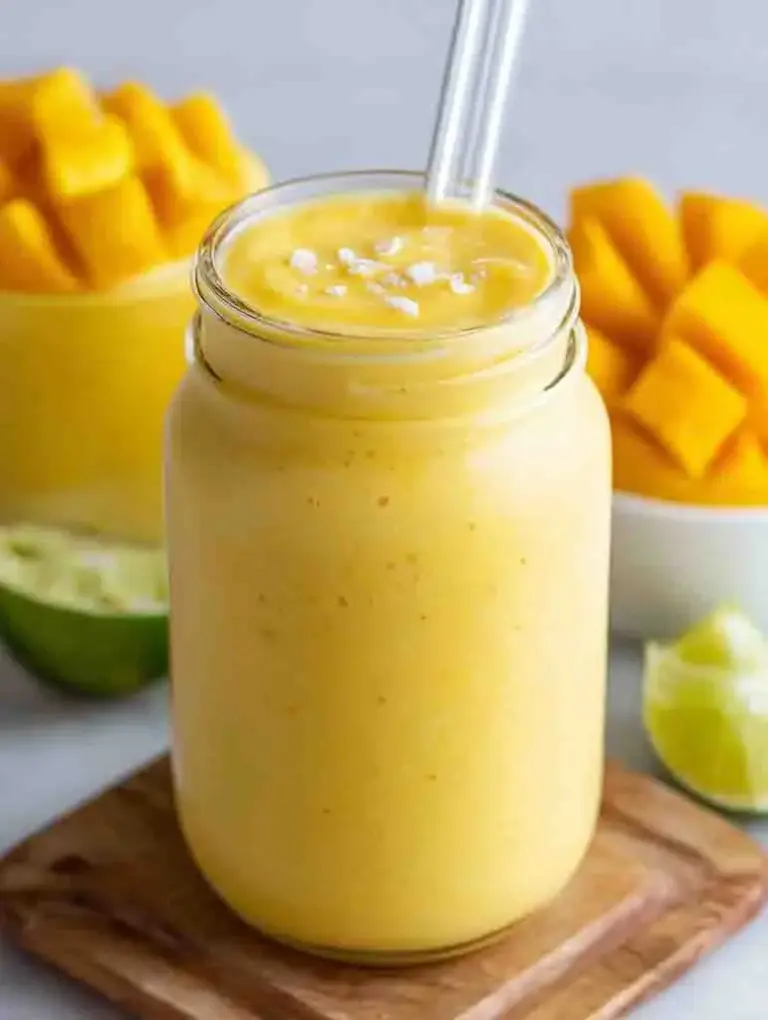
Mango Smoothie Magic
Mango Smoothie Magic is a creamy, refreshing, and naturally sweet smoothie made with ripe mango, banana, yogurt, and milk. It’s perfect for breakfast, a quick snack, or a cooling summer drink.
- Total Time: 5 minutes
Ingredients
- 1 cup ripe mango chunks, fresh or frozen
- 1/2 frozen banana
- 1/2 cup Greek yogurt
- 1/2 cup milk of choice
- 1 teaspoon honey, optional
- 1/2 cup ice cubes, optional
- 1 teaspoon fresh lime juice
Instructions
- Add the milk and Greek yogurt to the blender first.
- Add the mango chunks, frozen banana, honey, ice cubes, and lime juice.
- Blend on high speed for 1 to 2 minutes, until smooth and creamy.
- Taste and adjust sweetness if needed.
- Pour into glasses and serve immediately.
Notes
- Use frozen mango for a thicker smoothie.
- Add more milk for a thinner consistency.
- For extra tropical flavor, use coconut milk instead of regular milk.
- This smoothie is best enjoyed fresh.
- Prep Time: 5
- Category: Breakfast, Drinks, Smoothies
- Method: Blended
- Cuisine: American, International
- Diet: Gluten Free
Nutrition
- Serving Size: 300g
- Calories: 220 kcal
- Sugar: 24 g
- Sodium: 60 mg
- Fat: 5 g
- Saturated Fat: 2.5 g
- Unsaturated Fat: 2.5 g
- Trans Fat: 0 g
- Carbohydrates: 38 g
- Fiber: 3.5 g
- Protein: 8 g
- Cholesterol: 10 mg
Conclusion
The humble mango smoothie embodies what makes food truly special – it can be simultaneously nutritious and delightful, simple yet endlessly customizable. Whether you’re sipping on a classic version with yogurt and honey or experimenting with cardamom and coconut cream, that vibrant orange glow promises a moment of tropical bliss in your day.
The best mango smoothies start with quality fruit and thoughtful combinations, but don’t be afraid to play with proportions and ingredients to suit your personal preferences. Maybe you’ll discover that a hint of ginger transforms your morning blend, or that a sprinkle of turmeric adds both color and anti-inflammatory benefits.
Remember that perfection in smoothie-making comes from balancing flavors, textures, and nutritional components. A truly great mango smoothie satisfies both your taste buds and your